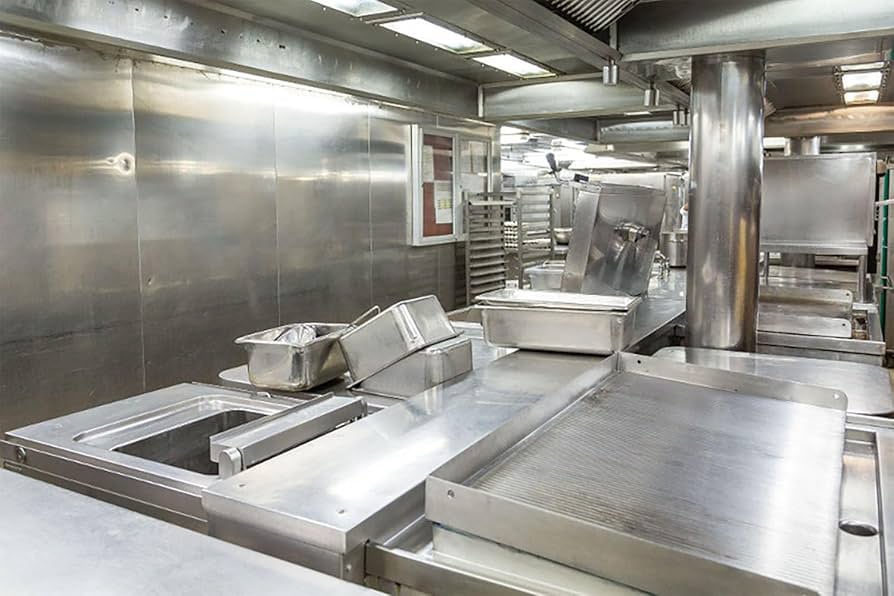
Commercial kitchen steel is the backbone of hygienic, durable, and regulation-compliant food preparation environments. From wall cladding and splashbacks to work surfaces and protective panels, steel plays a central role in how professional kitchens function day to day. In high-output kitchens where heat, moisture, grease, and constant cleaning are part of normal operations, steel is relied upon because it performs consistently under pressure.
One of the most important reasons steel is used so extensively in commercial kitchens is hygiene. Food preparation environments must be kept clean at all times, and surfaces need to withstand repeated cleaning without degrading. Stainless steel, in particular, provides a smooth, non-porous surface that does not absorb moisture, grease, or bacteria. This makes it easier to sanitise effectively and helps kitchens meet Environmental Health requirements.
Walls in commercial kitchens are subject to intense use. Cooking equipment generates heat and steam, sinks and dishwash areas create constant splashing, and staff movement increases the likelihood of impact. Steel wall cladding protects underlying structures from damage while creating a surface that can be wiped down quickly between service periods. Compared to painted walls or tiles, steel offers far greater resistance to wear and tear in these demanding conditions.
Steel is also valued for its heat resistance. Behind cooklines, grills, fryers, and ovens, wall finishes must tolerate elevated temperatures without burning, warping, or releasing harmful substances. Stainless steel performs reliably in these zones, making it a safe and practical choice. While cladding alone is not a fire safety system, using non-combustible materials such as steel contributes to safer kitchen environments.
A major advantage of commercial kitchen steel is its versatility. Steel can be used in a wide range of applications, including full-height wall cladding, partial wall protection, splashbacks, equipment housings, and kick plates. This allows kitchens to be designed with different zones, using steel where performance demands are highest and combining it with other hygienic materials elsewhere.
In many professional kitchens, a hybrid approach is used. Stainless steel cladding is installed in high-risk areas such as behind cooking equipment and sinks, while hygienic PVC wall panels are used on surrounding walls. This approach balances cost and performance, ensuring that steel is used where its benefits are most needed while maintaining hygiene across the entire space.
Finish selection is an important consideration when specifying commercial kitchen steel. Brushed or satin finishes are commonly chosen because they reduce glare and help hide fingerprints, water marks, and minor scratches. Highly polished finishes can be visually striking but often require more frequent cleaning to maintain their appearance in busy kitchens.
Thickness and grade selection also influence performance. Thicker steel panels provide greater resistance to impact and distortion, which is valuable in high-traffic kitchens. Higher-grade stainless steels offer improved corrosion resistance, particularly in wet or chemical-heavy cleaning environments. Selecting the correct specification helps ensure long-term durability and reduces maintenance issues.
Installation quality is critical to the success of commercial kitchen steel systems. Panels must be installed onto suitable substrates using appropriate adhesives or fixings. Joints, edges, and corners should be finished with profiles or sealed to prevent moisture ingress and dirt accumulation. Poor installation can undermine hygiene performance, regardless of material quality.
Steel also contributes to operational efficiency. Surfaces that are easy to clean reduce the time staff spend on end-of-shift cleaning, which can have a meaningful impact on labour costs. Consistent wall finishes also make it easier to identify areas that need attention during routine inspections.
Maintenance requirements for commercial kitchen steel are relatively low when compared to alternative materials. Regular cleaning with suitable products helps maintain appearance and hygiene. While minor surface marks may develop over time, steel retains its functionality and remains compliant.
At StainlessSteelCladding.co.uk, commercial kitchen steel solutions are specified with real-world use in mind. By understanding how kitchens operate, materials can be selected and installed to support hygiene, durability, and workflow efficiency.
In summary, commercial kitchen steel is essential for creating safe, hygienic, and durable food preparation environments. Its resistance to heat, moisture, and wear, combined with ease of cleaning, makes it the material of choice for professional kitchens. When specified correctly and installed with attention to detail, steel supports both compliance and long-term operational success.