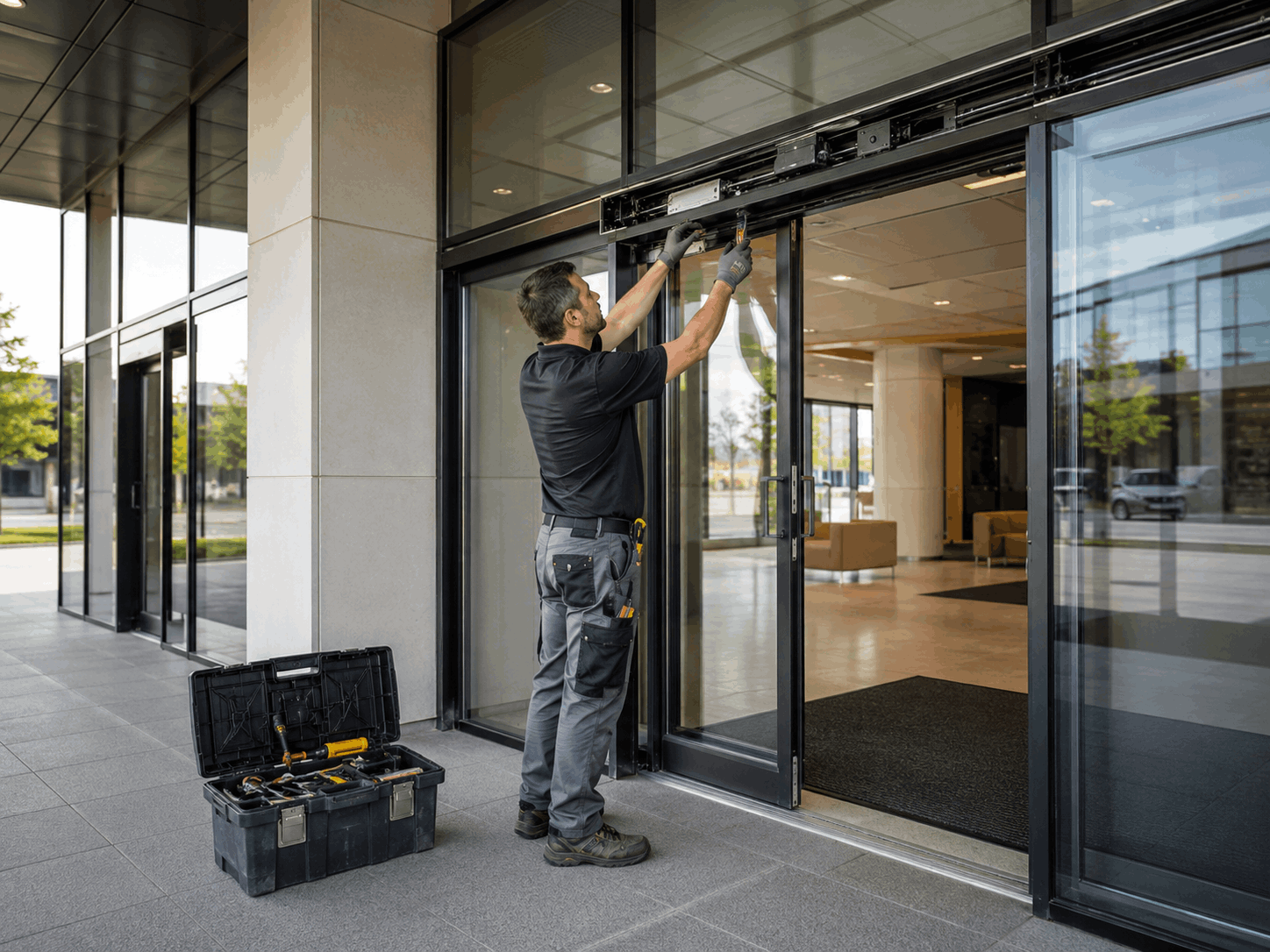
Expert Automatic Door Repairs are essential for keeping powered entrances safe, secure and reliable in busy commercial, public and residential buildings. Automatic doors are used every day in shops, offices, hotels, healthcare settings, apartment blocks, schools, supermarkets and other high-footfall premises. They provide convenient access for customers, staff, residents and visitors, but when a fault develops, the disruption can be immediate.
A well-functioning automatic door should open smoothly, respond correctly to sensors and close safely after use. If the door becomes slow, noisy, uneven, unresponsive or fails to close properly, it may need professional attention. Even minor faults should not be ignored, as they can place additional strain on motors, tracks, rollers, sensors and control units. Acting early can help prevent a small issue from turning into a more serious breakdown.
One of the main reasons to use expert automatic door repairs is safety. Powered doors include moving parts, electronic controls and safety systems that must work together correctly. If a sensor fails, the door closes too quickly or the movement becomes irregular, users could be placed at risk. This is especially important in buildings used by the public, elderly visitors, wheelchair users, children or people with mobility difficulties.
Security is another important concern. A faulty automatic door may not close fully, lock properly or operate correctly outside opening hours. For shops, offices, apartment entrances and commercial premises, this can leave the building vulnerable. Expert repair helps restore secure operation, protecting staff, residents, equipment, stock and the wider property.
Automatic door faults can be caused by a wide range of issues. Common problems include failed sensors, worn rollers, damaged tracks, faulty motors, control panel faults, loose fixings, damaged hinges, lock problems, wiring issues or impact damage. In busy environments, doors may be affected by constant use, deliveries, trolleys, weather exposure or accidental knocks. A trained technician can inspect the system properly and identify the exact cause of the fault.
Different types of automatic doors require different repair methods. Sliding doors, swing doors, folding doors, revolving doors and powered entrance systems all have their own components and common problem areas. Expert Automatic Door Repairs ensure that the correct approach is used for the door type, helping to avoid unnecessary part replacements and reducing the chance of repeat faults.
A professional repair visit will usually begin with a detailed inspection of the door system. The engineer may check the activation sensors, safety sensors, motor, operator, tracks, rollers, hinges, locks, control unit, emergency release and overall door movement. Once the fault is identified, they can explain what needs to be repaired, whether parts are required and whether maintenance would help prevent future issues.
Accessibility is another major reason to keep automatic doors in good working order. Powered entrances help wheelchair users, people with reduced mobility, parents with prams and visitors carrying bags or equipment. If the door fails, access may become difficult or even impossible for some users. Professional repairs help ensure the building remains welcoming, accessible and easy to use.
For businesses, a faulty automatic door can affect first impressions. Customers expect entrances to work smoothly and safely. A door that judders, sticks or refuses to open can make a premises look poorly maintained. In retail, hospitality and office environments, a reliable entrance supports a more professional image and helps visitors feel confident when entering the building.
Planned maintenance can also reduce the need for urgent repairs. Automatic doors in commercial and public buildings often operate many times each day, which naturally causes wear. Regular servicing can check sensors, tracks, motors, safety systems, locks and controls before they fail completely. This preventative approach can reduce disruption, extend the life of the system and help control repair costs.
Emergency expert automatic door repairs may be needed when a door fails suddenly. A door stuck open can create a security issue, while a door stuck closed can block access and affect daily operations. Fast professional response can help make the entrance safe, restore normal use and minimise downtime.
Property managers, landlords and business owners should not wait until automatic doors stop working completely before arranging repairs. Warning signs such as unusual noises, delayed opening, sensor problems, uneven movement or failure to close should be checked early. Prompt repair protects the system and helps avoid larger faults.
When choosing a repair provider, experience and clear communication matter. A good technician should explain the issue in plain terms, provide practical repair options and advise if any parts are worn or likely to fail. Honest advice helps building owners make informed decisions about repairs, maintenance and future upgrades.
In summary, Expert Automatic Door Repairs help keep powered entrances safe, secure, accessible and dependable. Whether the fault involves sensors, motors, tracks, rollers, controls or locking systems, professional repair can restore smooth operation and reduce disruption. With timely repairs and regular maintenance, automatic doors can continue to provide reliable access for everyone using the building.